Thinking about buying, leasing, or investing in commercial space? A commercial property agent in Singapore does a genuinely different job than a residential one: different financing rules, different tax treatment, and in some cases, an entirely different government body governing what you can and can't do with the space.
This matters whether you're a business owner hunting for your first office, an investor eyeing industrial yields, or a retailer negotiating a shophouse lease. Get the wrong guidance here, and the mistakes are expensive, not just inconvenient.
Buying vs Renting Commercial Space: Different Agent, Different Job
Before anything else, get clear on which track you're actually on, because the process, paperwork, and even the regulations differ significantly.
Buying commercial property means dealing with stamp duty, financing structure, and potentially a company purchase vehicle. Renting means negotiating a Letter of Intent, a Tenancy Agreement, and lease terms that protect you for the length of your tenancy. A good property agent in Singapore handles both, but the actual work looks nothing alike between the two.
What a Commercial Property Agent Actually Does
Beyond opening doors for viewings, here's the real scope of the job:
Market knowledge and sourcing:
- Checking the URA Master Plan to confirm your intended business activity is actually zoned for that site
- Accessing off-market deals through professional networks before space hits public listings
- Analyzing recent comparable transactions to tell you if an asking price or rent is realistic
Negotiation and management:
- Negotiating rent, deposit amounts, and repair responsibilities in your favour
- Organizing viewings and inspection tours that actually match your operational needs
- Mediating early disputes between tenant and landlord before they escalate
Compliance and paperwork:
- Verifying titles and conducting due diligence before you commit
- Handling the Letter of Intent and Tenancy Agreement for leases, or the Option to Purchase for buyers
- Guiding you through Buyer's Stamp Duty and GST implications specific to commercial transactions
If You're Buying: No ABSD on Commercial Property
This is the single biggest number in the entire buying decision, and it's the reason a lot of residential investors eventually shift into commercial.
Additional Buyer's Stamp Duty simply doesn't apply to commercial property. Compare that to residential: a Singapore Citizen buying a second residential property pays 20% ABSD, and 30% on a third. On a $1,500,000 purchase, that's $300,000 in ABSD alone on a second residential unit, money that disappears entirely if the same capital goes into commercial property instead.
That doesn't make commercial automatically the better investment; yields, financing terms, and liquidity all differ from residential. But the ABSD exemption is exactly the kind of detail a commercial property agent in Singapore should walk you through before you assume residential is your only expansion option.
Financing Commercial Property: Personal Name vs Corporate Structure
Financing here branches in a way residential financing doesn't, and the branch you take changes your entire loan process.
Buying under your personal name: You're subject to Total Debt Servicing Ratio (TDSR), capped at 55% of your gross income across all debts. Banks assess you the same way they would for a private residential loan, just against a commercial asset.
Buying under a corporate structure (SPV or Pte Ltd): TDSR doesn't apply to the company itself. Instead, banks evaluate your company's financial statements, cash flow, and business track record to determine loan eligibility. This route is common among investors and business owners specifically because it sidesteps the personal income ceiling entirely, though banks will still scrutinize the company's financial health closely.
Neither route uses CPF funds, and neither is subject to MSR, since that ratio only applies to HDB and EC loans. Interest rates on commercial loans also tend to run higher than residential, with shorter loan tenures, so factor that into your holding cost calculations upfront.
GST: The Tax Residential Buyers Never Think About
Residential property transactions don't carry GST. Commercial transactions sometimes do, depending on whether the seller is GST-registered and how the property is being used.
If GST applies, it's charged on top of the purchase price, and buyers registered for GST themselves may be able to claim it back through input tax credits, while unregistered buyers absorb it as a real cost. This is exactly the kind of detail that trips up first-time commercial buyers coming from a purely residential background. Confirm GST treatment with your agent and lawyer before you sign anything, not after.
If You're Renting: What the Leasing Process Looks Like
Leasing commercial space runs through different paperwork entirely from a purchase.
It typically starts with a Letter of Intent (LOI), a non-binding document outlining proposed rent, lease term, and key conditions, used to negotiate before drafting the full Tenancy Agreement. Once terms are agreed, the Tenancy Agreement locks in rent, deposit, repair obligations, and renewal terms formally.
Off-market sourcing matters more on the leasing side than the buying side, since a well-connected agent can put you in front of space before it's publicly advertised, often at better rates than a bidding war on an open listing would produce. Landlord-tenant disputes over repair responsibility or early termination are also common enough that having an agent mediate rather than negotiating yourself directly tends to protect both the relationship and your lease terms.
Industrial Property and JTC, Rules Standard Zoning Doesn't Cover
If you're looking at industrial space specifically, there's an entire additional layer most commercial guides skip: JTC Corporation, Singapore's principal developer and manager of industrial land.
A large share of industrial estates sit on JTC-allocated land, which comes with conditions that standard URA zoning simply doesn't include:
- Assignment and sale approval: selling or assigning a JTC lease typically requires JTC's prior approval, and the buyer must qualify as a genuine industrialist with an approved use, not a passive investor
- Minimum occupation requirements: some JTC allocations require you to actually occupy and operate the space for a set period before you're allowed to sell
- Subletting caps: JTC generally caps subletting at 30% of gross floor area, subject to case-by-case approval that can take 2-4 weeks, and unauthorized subletting risks lease termination or sublet fees of up to 100% of assessed rent
- Shorter lease tenure: JTC leases commonly run 30 to 60 years, meaningfully shorter than the 99-year or freehold terms common in private developments
Private strata industrial units, by contrast, can generally be mortgaged, assigned, and sublet without JTC's involvement at all. Knowing whether a specific unit sits on JTC land or private land changes your entire ownership experience, and it's not always obvious from the listing alone. A commercial property agent in Singapore with industrial experience should flag this before you commit, not after.
Retail, Office, Industrial, Shophouse: Not All Commercial Is the Same
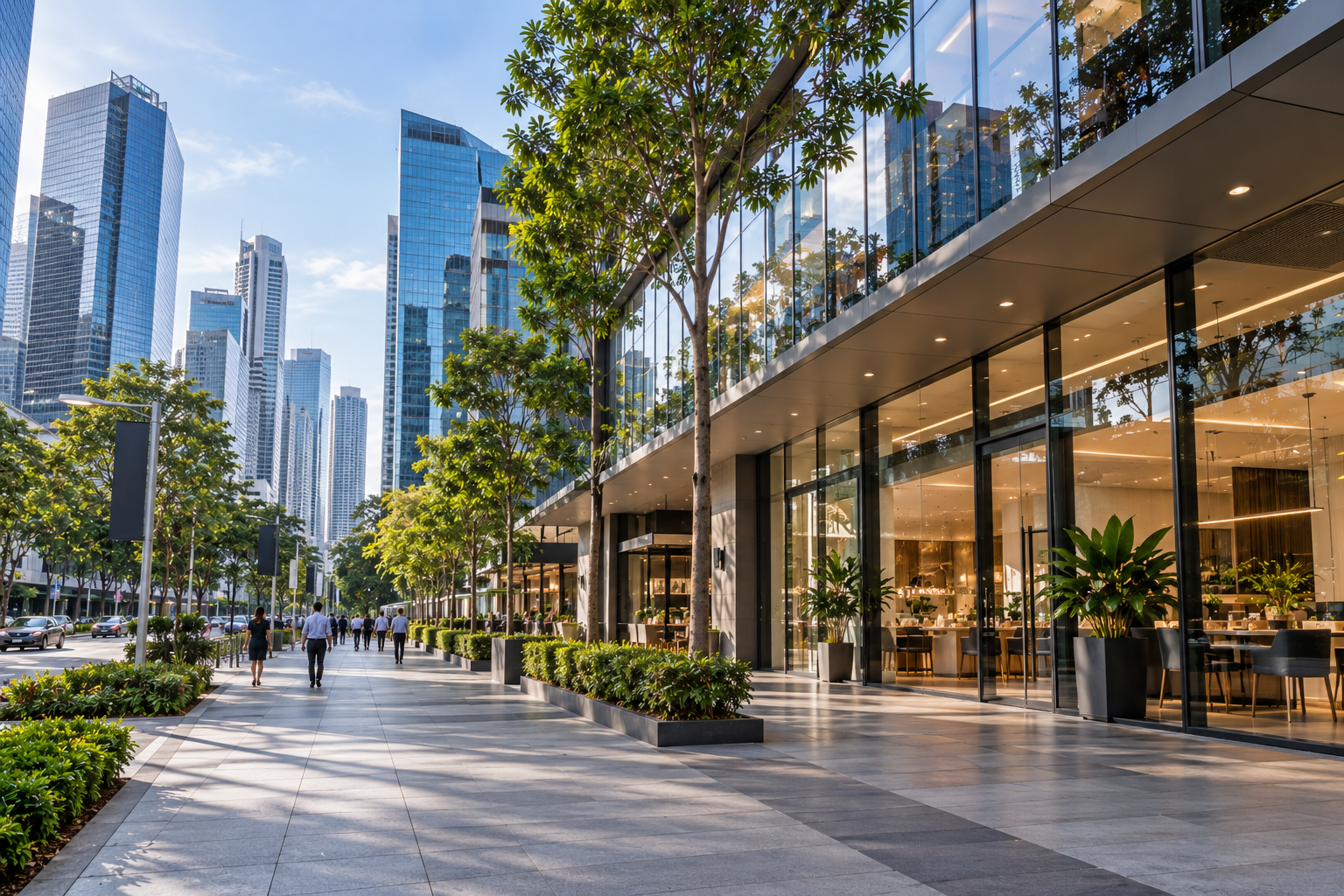
Singapore's commercial market splits into a few distinct categories, each suited to different business needs:
- Retail: shops, F&B units, gyms, and traditional or HDB shophouses, driven heavily by footfall and location
- Office: professional workspace, typically leased rather than bought by smaller businesses, with financing and zoning closer to standard commercial rules
- Industrial: warehouses, factories, and workshop space, frequently JTC-governed with the restrictions covered above
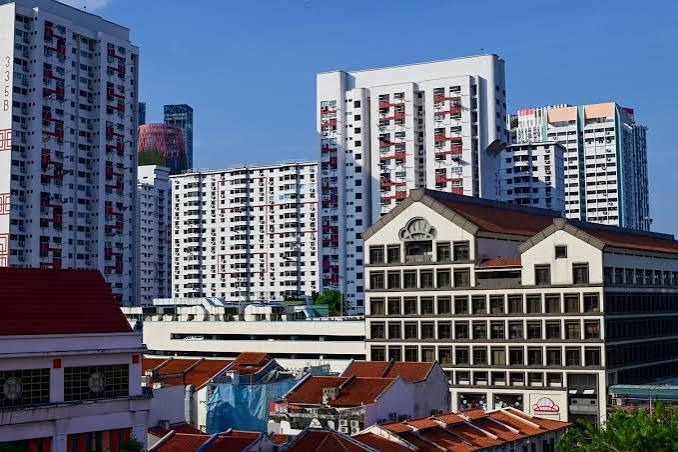
- Shophouse: a distinct heritage category with its own conservation and usage rules layered on top of standard zoning
Matching the right category to your actual business use matters more than chasing the lowest price per square foot; the wrong category can mean zoning violations down the line.
Questions to Ask Before Engaging a Commercial Property Agent
Not every agent who handles residential deals well is equipped for commercial. Ask these before committing to work with someone:
- Have you handled transactions in the specific category I need: retail, office, industrial, or shophouse?
- Can you walk me through the ABSD and GST implications for my specific purchase?
- If I'm considering industrial space, do you know whether the unit sits on JTC or private land?
- What's your approach to sourcing off-market opportunities, versus just sending public listings?
- Have you handled deals involving a corporate purchase structure before?
An agent who answers all five clearly and specifically, rather than in generalities, is signalling real commercial experience rather than a residential background stretched to cover commercial work.
Why Businesses and Investors Work With Able S.K Toh
Able is a PropNex Gold Achiever with experience spanning HDB, condo, landed, and commercial transactions across Singapore. On the commercial side, that cross-segment background means he brings the same transparent, numbers-first approach clients consistently mention in his residential reviews, walking through financing structure, tax implications, and zoning checks clearly before you commit, rather than rushing you into a decision.
Considering a commercial purchase or lease? Visit Able Sell Property or reach out to Able directly before you commit to a purchase or lease.
Get a Free, No-Obligation Valuation
Chat with Able S.K Toh directly on WhatsApp, or call the number below.
Final Thoughts
A commercial property agent in Singapore isn't doing a bigger version of a residential deal; it's a different job entirely, from ABSD exemptions and corporate financing structures to JTC's industrial rules and GST treatment that residential buyers never encounter.
Get these details wrong, and the cost isn't just a bad deal; it's a compliance problem down the line. Visit Able Sell Property or Message Able on WhatsApp for a straight conversation about your specific situation, no pressure.
FAQs
1. Do I pay ABSD on commercial property in Singapore?
No. Additional Buyer's Stamp Duty applies only to residential property, making commercial property a common option for investors managing residential ABSD exposure elsewhere.
2. Can I use CPF to buy commercial property?
No. CPF funds cannot be used for commercial property purchases, regardless of whether you buy personally or through a company.
3. What's the difference between buying and leasing commercial space?
Buying involves stamp duty, financing, and possibly a corporate purchase structure. Leasing involves a Letter of Intent followed by a Tenancy Agreement, with no property tax or ABSD exposure.
4. Does GST apply when buying commercial property in Singapore?
Sometimes, depending on the seller's GST registration status. Confirm GST treatment with your agent and lawyer before signing, since it affects your total transaction cost.
5. What is a Letter of Intent in commercial leasing?
A non-binding document outlining proposed rent, lease term, and key conditions, used to negotiate terms before the formal Tenancy Agreement is drafted.
6. What types of commercial property can I invest in or lease?
Retail, office, industrial, and shophouse are the main categories, each with different zoning rules, financing norms, and, in the case of industrial, potential JTC restrictions.