Most guides give you a formula and stop there. Here's the honest number first: after all real costs, stamp duty, mortgage interest, property tax, vacancy, and agent fees, most Singapore residential investments over a 10-year hold land at just 3% to 6% annualized return. If you want to calculate property investment ROI in Singapore properly, you need more than one formula. You need the full stack.
This matters whether you're comparing your first rental unit against a second purchase, or trying to work out if property genuinely beats parking your money elsewhere. Able, an experienced property agent in Singapore, walks investors through this exact calculation before they commit, not after.
Table of Contents
The 1% Rule: A Fast First Screen
Before running full numbers, use this as a quick filter: monthly rent should be roughly 1% or more of the purchase price. A $1,000,000 condo renting for $10,000 a month clears it easily. One renting for $3,000 doesn't, and probably isn't worth deeper analysis unless capital appreciation is doing most of the work.
This isn't a final answer, it's a fast way to avoid wasting time on properties that won't pencil out anyway.
The Three Numbers That Actually Matter
Three metrics do most of the real work when you calculate property investment ROI in Singapore, and each answers a different question.
Gross yield = (Annual Rent ÷ Purchase Price) × 100. A $1,000,000 condo renting at $3,500 a month: ($3,500 × 12) ÷ $1,000,000 × 100 = 4.2%. Fast, but ignores every real cost.
Net yield = (Net Rental Income ÷ Purchase Price) × 100. Strip out property tax, maintenance, insurance, and agent commission first. This is the number serious buyers actually trust.
Cash-on-cash return = (Annual Net Cash Flow ÷ Total Cash Invested) × 100. This measures return on the actual cash you put down, not the full property value, and with leverage, it's often meaningfully higher than either yield figure.
What Counts as "Total Investment"
Getting your ROI denominator right matters as much as the numerator. Total investment should include:
- Purchase price
- Buyer's Stamp Duty: roughly (Price × 3%) − $5,400 under $1M, or (Price × 4%) − $15,400 above $1M
- ABSD, if applicable to your buyer profile
- Legal and conveyancing fees
- Renovation and furnishing costs to make the unit tenantable
- Your actual down payment (cash and CPF combined)
Skip any of these and your ROI looks better on paper than it will in reality.
Don't Forget Vacancy
No rental property sits occupied 100% of the time. Build a realistic vacancy allowance into your calculation, most experienced investors use 95% of market rent as a conservative baseline, accounting for the gap between tenants during turnover.
Skipping this step is one of the most common reasons a first-time investor's actual return falls short of their projected one. It's a small percentage on paper that compounds into real missed income over a multi-year hold.
The Leverage Effect Nobody Explains Clearly
Here's the part most yield-focused content misses entirely. A property with a modest 3% net yield and 5% annual appreciation can produce a 12-15% annualized total return, not because the yield is exceptional, but because appreciation applies to the full property value, while you only invested roughly 25-30% of that value in cash.
This is why comparing properties purely on yield percentage can mislead you. A lower-yield property in a strong-appreciation location can meaningfully outperform a higher-yield property in a stagnant one, once leverage is factored in properly.
IRR: Why Two Properties With the Same Yield Differ
Internal Rate of Return accounts for something gross and net yield don't: timing. Two properties can show an identical average annual return on paper, but if one delivers most of its gain early and the other backloads it toward the sale, their real IRR differs.
You don't need to run a full discounted cash flow model to grasp the concept. Just know this: a property investment agent in Singapore comparing a 5-year hold against a 10-year hold for you should be talking about IRR, not just average annual yield, because the timing of your cash flows genuinely changes what your money is worth to you today.
What's a Good Rental Yield in Singapore?
Realistic benchmarks by property type, gross:
- Condo: 2.5% to 4%
- HDB (post-MOP): 4% to 6%
- Landed: 1.5% to 3%
- Commercial / Shophouse: 3% to 5%
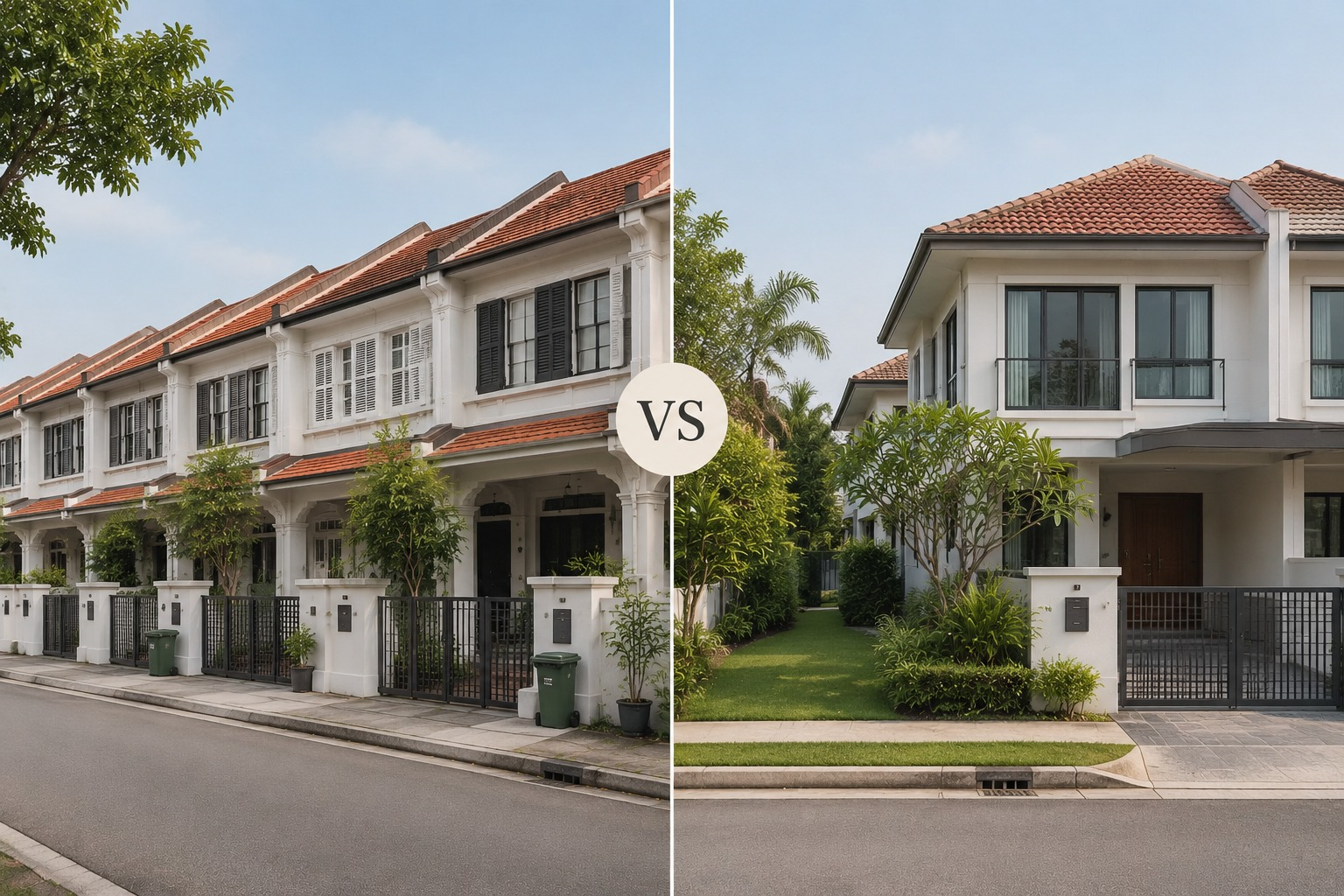
Landed sits lowest because land value dominates the purchase price relative to achievable rent. HDB sits highest largely because entry prices are lower relative to strong rental demand.
A Full Worked Example
Take a $1,000,000 condo, rented at $3,500 a month, with a 25% cash down payment ($250,000).
- Gross rent: $3,500 × 12 = $42,000 a year
- Adjust for vacancy at 95%: $39,900
- Subtract expenses, property tax ($4,000), maintenance ($3,000), agent commission (~$3,500): net income of roughly $29,400
- Net yield: $29,400 ÷ $1,000,000 = 2.94%
- Cash-on-cash, after mortgage interest of roughly $15,000 on the loan: annual cash flow of $14,400 ÷ $250,000 cash invested = 5.76%
- Add capital appreciation at a conservative 3% a year on the full $1,000,000 value: $30,000, applied against the $250,000 cash base, adds another 12% to the total leveraged return
Combined, this property's real total annualized return sits meaningfully above the 2.94% net yield figure alone, which is exactly why stopping at yield understates what leverage is actually doing for you.
Is 3-6% Actually Good?
Context matters here. Singapore Savings Bonds currently yield close to 3% with essentially no risk. The S&P 500's long-run historical average sits closer to 8%, with considerably more volatility.
A 3-6% annualized property return after all costs sits roughly between those two, comparable to a risk-free bond at the low end, below equities at the high end. Property earns its place in a portfolio through leverage, tangibility, and Singapore's specific tax treatment (including zero capital gains tax on genuine long-term holds), not because the raw percentage beats every alternative outright.
How Taxes Change This Calculation
Everything above assumes a straightforward purchase. ABSD, reduced LTV on a second property, CPF opportunity cost, and Seller's Stamp Duty on an early exit all shift the real numbers further, sometimes significantly. We've covered this full tax-impact stack, including a worked case study, in our guide on how ABSD affects your ROI, worth reading alongside this if you're weighing a second property specifically.
Common Mistakes When Calculating Property ROI
- Using gross yield only, without netting out real costs
- Ignoring vacancy and assuming 100% occupancy every year
- Comparing yield alone without factoring in leverage's effect on total return
- Forgetting stamp duty and legal fees in the total investment base
- Treating a 5-year and 10-year hold as equivalent without considering IRR and timing
Why Investors Work With Able S.K Toh
Running this full calculation properly, against your specific property and your specific financing, is exactly where a second opinion earns its value. Able is a PropNex Gold Achiever and a genuine property investment agent in Singapore, walking clients through gross yield, net yield, leverage, and the tax layer together, not just a single number in isolation.
If you're deciding whether the numbers on a specific property actually work, message Able on WhatsApp for a straight read on your numbers.
Final Thoughts
Learning to calculate property investment ROI in Singapore properly means going past a single yield percentage; vacancy, leverage, IRR, and the tax stack all shape what you actually walk away with. The honest 3-6% benchmark after all costs is a useful anchor, but your specific numbers can land well above or below it depending on how the property is financed and held.
Visit Able Sell Property or reach out to Able directly, widely regarded as the best property agent in Singapore for investors who want the full numbers before committing, not just a headline yield figure.
FAQs
How do you calculate property investment ROI in Singapore?
Start with gross yield, then net yield after real costs, then cash-on-cash return accounting for leverage. Add capital appreciation and factor in vacancy and taxes for the complete picture.
What's the difference between gross yield and net yield?
Gross yield is annual rent divided by purchase price. Net yield subtracts property tax, maintenance, insurance, and agent commission first, giving a more accurate return figure.
What is a good rental yield in Singapore?
Roughly 2.5-4% for condos, 4-6% for HDB post-MOP, 1.5-3% for landed, and 3-5% for commercial property, all on a gross basis.
What is cash-on-cash return and why does it matter?
It measures your return on the actual cash you invested, not the full property price, making it especially relevant when you're using a mortgage to finance the purchase.
How does leverage affect property investment returns?
Appreciation applies to the full property value while you've only invested a fraction in cash, which is why a modest yield combined with steady appreciation can produce a much higher total leveraged return.
What is IRR and why does it matter for property investment?
Internal Rate of Return accounts for the timing of cash flows, not just the total amount, which matters when comparing holds of different lengths that show similar average yields.
Is Singapore property a good investment compared to stocks or bonds?
After all costs, typical returns of 3-6% sit between Singapore Savings Bonds (~3%) and long-run equity returns (~8%), with property offering leverage and tax advantages stocks and bonds don't.
What mistakes do first-time investors make calculating ROI?
Using gross yield without netting out costs, ignoring vacancy, comparing yield without factoring leverage, and treating different hold periods as directly comparable without considering IRR.